













































A More Secure Future for Cryptocurrency in Gambling
Cryptocurrency in gambling continues to transform how players deposit, withdraw, and manage funds online. Digital assets can offer fast transactions, global accessibility, and blockchain-based transparency, but these advantages also make security an essential part of the player experience.
The latest developments in cryptocurrency in gambling are focused on one clear goal: helping users protect their funds and personal information while enjoying convenient digital transactions.
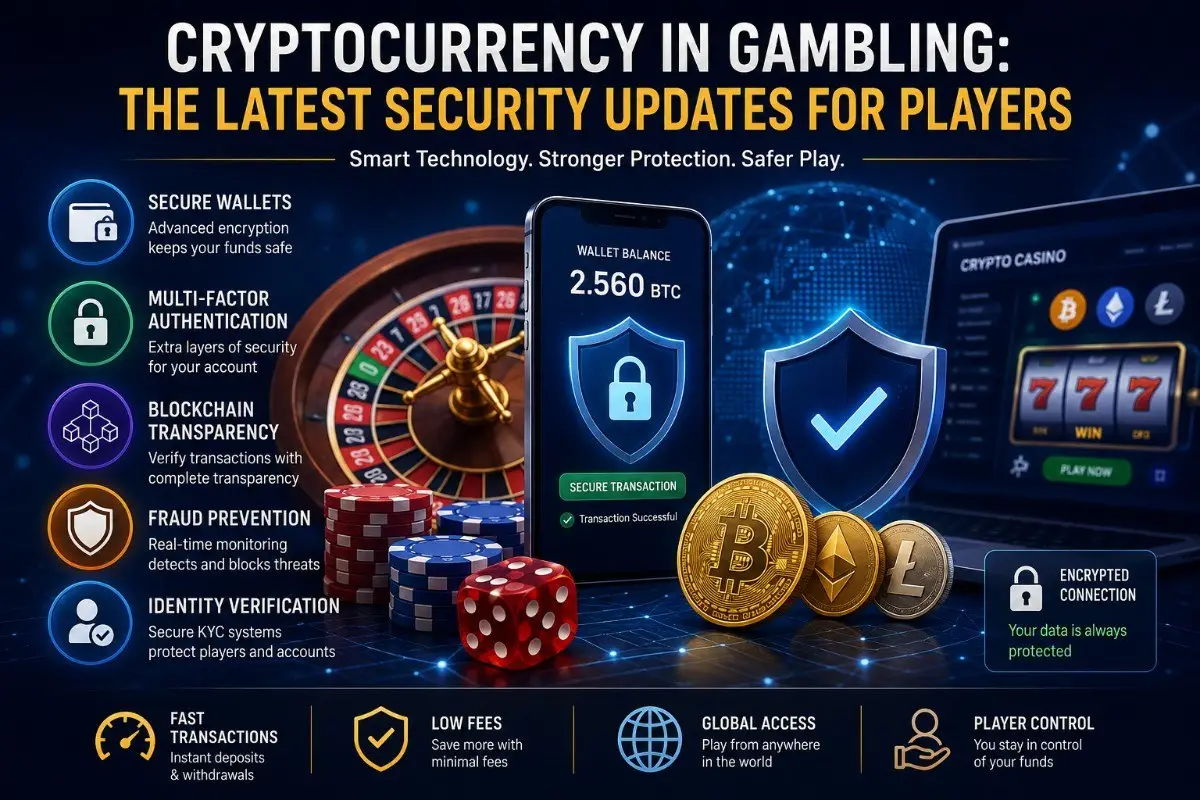
Modern security systems now combine blockchain technology with multi-factor authentication, advanced wallet protection, transaction monitoring, encryption, and improved identity verification. These technologies cannot eliminate every risk, but they can significantly strengthen the defenses available to players and legitimate platforms.




For anyone interested in cryptocurrency in gambling, understanding these security updates is one of the smartest steps toward making informed decisions. Excitement should never replace caution. The strongest experience is one built on convenience, transparency, and responsible security habits.
This guide was created as an informational resource using widely recognized cybersecurity and digital-asset security principles. Its purpose is to help players understand major security developments, identify common risks, and make safer decisions when interacting with cryptocurrency gambling services.
The Security Evolution of Cryptocurrency in Gambling
The earliest cryptocurrency platforms attracted attention because blockchain transactions offered a different approach to online payments. Instead of relying entirely on traditional banking systems, users could transfer supported digital assets directly between blockchain addresses.
As cryptocurrency in gambling has grown, security expectations have also increased.
Today, reputable digital services increasingly focus on several protective layers:
- Secure wallet infrastructure
- Strong account authentication
- Encrypted connections
- Blockchain transaction monitoring
- Fraud detection systems
- Improved identity and compliance procedures
- Safer withdrawal controls
- User education about scams and phishing
The important idea is simple: no single technology provides complete protection.
Cybersecurity experts generally recommend a layered approach. This means combining multiple independent safeguards so that the failure of one control does not automatically expose an account or wallet.
For cryptocurrency in gambling, this layered model is especially valuable because blockchain transactions are often irreversible. Once a transaction has been confirmed on many public blockchain networks, recovering funds may be difficult or impossible.
That reality makes prevention one of the most powerful security tools available.
Stronger Wallet Protection Is Becoming a Major Priority
A cryptocurrency wallet does not simply function like a traditional online account. Depending on the wallet type, access may depend on private cryptographic keys or recovery information.
Protecting those credentials is fundamental.
One of the most important security updates affecting cryptocurrency in gambling is the growing awareness of wallet separation.
Players may choose to keep only the amount intended for immediate activity in a transaction wallet while storing larger balances separately using stronger long-term security arrangements.
This approach can reduce the amount of funds exposed if a device, account, or service is compromised.
Common wallet security practices include:
- Using strong and unique passwords
- Enabling multi-factor authentication where available
- Protecting recovery phrases from online exposure
- Avoiding screenshots of sensitive recovery information
- Keeping software updated
- Reviewing transaction addresses carefully
- Using trusted wallet applications
- Maintaining separate wallets for different purposes when appropriate
The golden rule is powerful and straightforward: never share private keys or recovery phrases with anyone.
Legitimate support teams generally do not need these credentials to help users with ordinary account issues.
Multi-Factor Authentication Creates an Important Extra Barrier
Passwords alone are increasingly considered insufficient protection for valuable online accounts.
Multi-factor authentication, often called MFA or two-factor authentication, adds another verification step before sensitive account actions can be completed.
For cryptocurrency in gambling accounts, MFA can help protect against situations where a password has been stolen through a phishing attack or data breach.
Depending on the platform, authentication may involve:
- An authenticator application
- A hardware security key
- A confirmation notification
- Another independent verification method
Security experts often prefer authentication methods that are resistant to simple password theft. However, no method is perfect, and users should understand the strengths and limitations of the options offered by a platform.
The most effective habit is to enable the strongest authentication method available and protect all recovery options with equal care.
Blockchain Transparency Can Improve Transaction Awareness
One of the most distinctive aspects of cryptocurrency in gambling is the ability to review many transactions on public blockchain networks.
Blockchain explorers can allow users to verify transaction status, wallet addresses, and confirmation activity.
This does not mean that every blockchain transaction reveals the real-world identity of a user. Public blockchains generally record addresses and transaction information rather than automatically displaying personal identity details.
However, transparency can still provide valuable reassurance.
A player can often independently check whether:
- A transaction was broadcast to the network
- The transaction received confirmations
- Funds arrived at the intended blockchain address
- A transaction amount matches the expected value
This ability to independently verify blockchain activity is one reason digital asset technology remains so compelling.
For cryptocurrency in gambling, transaction transparency can provide an additional layer of confidence when combined with secure platform operations.
Advanced Fraud Detection Is Becoming More Sophisticated
Security technology is evolving rapidly.
Modern online services can use automated systems to identify suspicious activity, unusual login patterns, unexpected withdrawals, and other potential warning signs.
For example, a security system may detect:
- Login attempts from unfamiliar environments
- Sudden changes to account security settings
- Unusual transaction behavior
- Repeated failed authentication attempts
- Suspicious account access patterns
When properly implemented, these systems can trigger additional verification or temporarily restrict high-risk actions.
This can occasionally create an extra step for legitimate users, but additional verification may be worthwhile when protecting sensitive accounts and digital assets.
The latest security mindset in cryptocurrency in gambling increasingly prioritizes risk-based protection rather than treating every account action identically.
A normal login may require minimal interruption, while a high-value withdrawal or unexpected account change may trigger stronger verification.
Phishing Remains One of the Biggest Risks for Players
Despite advances in blockchain technology, many security incidents begin with a simple deception.
Phishing attacks attempt to convince users to reveal passwords, authentication codes, wallet credentials, or recovery information.
A fraudulent message may appear to come from:
- A gambling platform
- A cryptocurrency exchange
- A wallet provider
- A customer support representative
- A social media account
The message may create urgency by claiming that an account will be closed, funds are at risk, or immediate verification is required.
This emotional pressure is a warning sign.
A safer approach is to avoid clicking unexpected links and instead access a service through a previously verified website or official application.
Players involved in cryptocurrency in gambling should be especially cautious because attackers understand that cryptocurrency transactions can be difficult to reverse.
Pause before acting. Verify before entering credentials. Protect before transferring funds.
These simple habits can prevent many common attacks.
Secure Connections and Encryption Still Matter
Blockchain security is important, but the security of the connection between a user and an online platform also matters.
A trustworthy online service should use modern encryption technologies to help protect information transmitted between the user’s device and the service.
Players should also take responsibility for their connection security.
Public Wi-Fi networks can introduce additional risks, particularly when users log into financial or cryptocurrency-related accounts.
Good digital habits include:
- Keeping devices updated
- Using reputable security software when appropriate
- Avoiding suspicious downloads
- Locking devices when unattended
- Using secure and private internet connections
- Reviewing browser warnings carefully
Cryptocurrency in gambling is not protected by blockchain technology alone. The entire security environment matters, including the device, account, wallet, network connection, and platform.
Smarter Withdrawal Controls Can Protect Player Funds
Withdrawals are one of the most sensitive actions on a cryptocurrency gambling account.
For this reason, stronger platforms may introduce additional safeguards around changes to withdrawal addresses and high-risk transactions.
Potential protections can include:
- Confirmation requirements
- Multi-factor authentication
- Temporary security holds after major account changes
- Withdrawal notifications
- Additional verification for unusual activity
These measures can reduce the risk that an attacker who briefly gains account access can immediately redirect funds.
Players should also treat unexpected withdrawal notifications as urgent security alerts.
If a notification appears for an action you did not authorize, immediately secure the relevant account through verified support channels and change compromised credentials where appropriate.
Speed matters when responding to suspicious account activity.
Identity Verification Can Strengthen Platform Securit
Privacy is an important consideration in cryptocurrency, but security and regulatory responsibilities also require legitimate platforms to identify and manage certain risks.
Depending on the jurisdiction and service, identity verification may help platforms:
- Prevent account fraud
- Detect suspicious financial activity
- Reduce duplicate or fraudulent accounts
- Protect minors and restricted users
- Meet legal and regulatory requirements
Players should understand what information a platform requests and why.
A trustworthy service should provide clear information about privacy practices and how user data is protected.
Before submitting identity documents, users should verify that they are interacting with the genuine service rather than an imitation website.
This is another reason why secure browsing habits are essential for anyone using cryptocurrency in gambling.
How Players Can Evaluate a More Secure Platform
Security claims should never be accepted automatically.
Players should look for evidence of professional security practices.
Useful questions include:
Does the Platform Explain Its Security Measures Clearly?
Trustworthy services should communicate important security information in understandable language.
Vague promises of being “100% secure” should be viewed cautiously. No legitimate cybersecurity system can guarantee that risk will never exist.
Clear explanations are generally more meaningful than unrealistic promises.
Are Account Protection Features Available?
Look for features such as:
- Multi-factor authentication
- Login alerts
- Account activity monitoring
- Withdrawal confirmation systems
- Strong password requirements
Is Customer Support Accessible Through Verified Channels?
Support impersonation is a growing concern.
Use official contact methods and remain cautious of unsolicited messages claiming to provide account assistance.
Does the Platform Encourage Responsible Security Practices?
A positive security culture educates users instead of simply blaming them.
The strongest cryptocurrency in gambling environments treat security as a shared responsibility between the platform and the player.
The Future: More Intelligent and User-Friendly Protection
The future of cryptocurrency in gambling is likely to involve stronger automation and more seamless security experiences.
Potential developments include:
- Improved behavioral fraud detection
- More advanced wallet security
- Stronger phishing detection
- Hardware-based authentication
- Enhanced transaction risk analysis
- Better protection against account takeover
- More transparent security communications
The most exciting progress will not necessarily be the most complicated technology.
Often, the best security improvement is one that makes protection easier for ordinary users.
A system is stronger when players can understand how to use it correctly.
As the digital economy continues to evolve, cryptocurrency in gambling may benefit from wider adoption of security standards already used across financial technology and cybersecurity.
Responsible Use Remains Part of Real Security
Technology can protect accounts, but personal decision-making remains essential.
Before participating in cryptocurrency in gambling, players should understand the laws and regulations that apply where they live. Online gambling and cryptocurrency services may be restricted or regulated differently depending on location.
Players should also establish personal limits.
Security is not only about preventing unauthorized access. It is also about maintaining control over financial decisions.
Useful habits include:
- Setting a clear entertainment budget
- Avoiding impulsive transfers
- Reviewing transactions before confirming them
- Keeping accurate records
- Understanding the volatility of digital assets
- Taking breaks when needed
Cryptocurrency values can change significantly, sometimes over short periods. Players should never assume that a digital asset will maintain a particular value.
Responsible decisions support a safer and more sustainable experience.
Final Thoughts: Security Builds Confidence
Cryptocurrency in gambling continues to develop at an impressive pace, and security improvements are becoming an increasingly important part of that progress.
Stronger authentication, better wallet protection, blockchain transparency, intelligent fraud monitoring, encrypted connections, and safer withdrawal systems are helping create a more resilient digital environment.
The most important lesson for players is simple: security is a combination of technology and behavior.
Choose services carefully. Protect credentials. Verify addresses. Enable strong authentication. Remain alert to phishing attempts. Never rush when a transaction involves valuable digital assets.
With informed choices and strong security habits, players can approach cryptocurrency in gambling with greater awareness and confidence.
The future of digital transactions can be exciting, but the smartest excitement is built on knowledge.
Stay alert. Stay informed. Protect your digital assets.
Frequently Asked Questions About Cryptocurrency in Gambling
Is cryptocurrency in gambling secure?
Cryptocurrency in gambling can involve strong security technologies, including cryptography, blockchain verification, encryption, and multi-factor authentication. However, security depends on the platform, the wallet setup, the user’s device, and personal security habits. No payment system is completely risk-free.
What is the safest way to protect a cryptocurrency gambling account?
Use a strong and unique password, enable multi-factor authentication, protect wallet recovery information, keep devices updated, and use only verified websites and applications.
Can cryptocurrency transactions be reversed?
Many blockchain transactions are difficult or impossible to reverse once confirmed. Players should carefully verify wallet addresses, transaction amounts, and network details before sending funds.
Why are phishing scams dangerous in cryptocurrency in gambling?
Phishing attacks can trick users into revealing passwords, authentication codes, private keys, or recovery phrases. If attackers obtain sensitive wallet credentials, they may gain control over digital assets.
Should I keep all my cryptocurrency in a gambling account?
Keeping only the amount necessary for intended activity can reduce exposure. Long-term storage decisions should be made carefully based on the user’s security needs and understanding of the wallet options available.
Does multi-factor authentication really help?
Yes. Multi-factor authentication adds an additional layer of protection beyond a password. It can make unauthorized account access more difficult, particularly when a password has been compromised.
How can I verify a cryptocurrency transaction?
For supported public blockchains, a blockchain explorer can often be used to review transaction status and confirmations. Always verify that you are using the correct blockchain network and transaction details.
What should I do if I receive a suspicious account message?
Do not click unexpected links or provide credentials. Instead, independently visit the verified website or application and contact support through official channels.
Are all cryptocurrency gambling platforms equally secure?
No. Security practices vary between services. Players should evaluate available account protections, platform transparency, privacy practices, customer support, licensing or regulatory information where applicable, and the overall credibility of the service.
What is the most important security habit for cryptocurrency users?
Never share private keys or recovery phrases. These credentials can provide direct control over cryptocurrency assets and should be protected carefully.